

In the era of sustainable energy, biomass gas generator sets have emerged as a promising solution for clean and renewable power generation. As a dedicated biomass gas generator set supplier, I am excited to share with you the latest technologies that are revolutionizing this field. These advancements not only enhance the efficiency and performance of biomass gas generator sets but also contribute to a greener and more sustainable future.
Advanced Gasification Technologies
Gasification is a key process in biomass gas generator sets, where biomass is converted into a combustible gas known as syngas. Recent years have witnessed significant progress in gasification technologies, leading to more efficient and cleaner conversion of biomass.
Fluidized Bed Gasification
Fluidized bed gasification is a widely adopted technology that offers several advantages over traditional fixed - bed gasifiers. In a fluidized bed gasifier, the biomass is suspended in a bed of hot inert particles (such as sand) by an upward - flowing gas stream. This creates a highly turbulent environment, which promotes better mixing of the biomass and the gasifying agent (usually air, oxygen, or steam). As a result, the gasification reaction occurs more rapidly and uniformly, leading to higher gas yields and better quality syngas.
The fluidized bed can operate at different temperatures and pressures, allowing for flexibility in adjusting the gasification process according to the type of biomass and the desired syngas composition. Moreover, fluidized bed gasifiers can handle a wide range of biomass feedstocks, including agricultural residues, wood chips, and energy crops.
Entrained Flow Gasification
Entrained flow gasification is another advanced technology that is suitable for high - throughput biomass gasification. In this process, finely ground biomass is entrained in a high - velocity gas stream and injected into the gasifier. The high - temperature environment (usually above 1000°C) ensures rapid and complete gasification of the biomass, producing a high - quality syngas with low tar and char content.
Entrained flow gasifiers are often used in large - scale biomass power plants due to their high efficiency and ability to produce a clean syngas that can be directly used in gas turbines or internal combustion engines. However, they require a more sophisticated feedstock preparation system to ensure uniform particle size and proper feeding of the biomass.
Syngas Cleaning and Conditioning
The syngas produced from biomass gasification contains various impurities, such as tar, dust, sulfur compounds, and alkali metals. These impurities can cause problems in the downstream power generation equipment, such as corrosion, fouling, and reduced efficiency. Therefore, effective syngas cleaning and conditioning technologies are essential for the reliable operation of biomass gas generator sets.
Tar Removal Technologies
Tar is one of the most challenging impurities in syngas. It can condense at low temperatures and form sticky deposits in pipes, valves, and engines. Several tar removal technologies have been developed, including physical methods (such as filtration and scrubbing) and chemical methods (such as catalytic cracking).
Catalytic tar cracking is a promising technology that uses catalysts to break down the tar molecules into smaller, more stable compounds. Noble metal catalysts (such as platinum and palladium) and transition metal catalysts (such as nickel and iron) have been investigated for this purpose. These catalysts can operate at different temperatures and pressures, and their performance can be optimized by adjusting the catalyst composition and reaction conditions.
Sulfur and Alkali Metal Removal
Sulfur compounds in syngas can cause corrosion in the power generation equipment and emit harmful pollutants into the atmosphere. Alkali metals can also cause fouling and corrosion problems. To remove these impurities, various sorbents and scrubbing agents are used.
For sulfur removal, solid sorbents such as zinc oxide and iron oxide can be used to adsorb the sulfur compounds at high temperatures. Wet scrubbing systems can also be employed to remove sulfur dioxide by reacting it with an alkaline solution. Alkali metal removal can be achieved by using filters or sorbents that selectively capture the alkali metals from the syngas.
Power Generation Technologies
Once the syngas is cleaned and conditioned, it can be used to generate electricity in various power generation systems. The choice of power generation technology depends on the scale of the biomass gas generator set, the quality of the syngas, and the specific requirements of the application.
Internal Combustion Engines
Internal combustion engines are a popular choice for small - to medium - scale biomass gas generator sets. They are relatively simple, reliable, and have a high efficiency. Syngas can be used as a fuel in spark - ignition or compression - ignition engines.
Spark - ignition engines are suitable for syngas with a lower heating value and can operate on a wide range of syngas compositions. Compression - ignition engines, on the other hand, require a higher - quality syngas with a higher heating value. Advancements in engine design and control systems have improved the performance and efficiency of syngas - fueled internal combustion engines, making them more competitive in the market.
Gas Turbines
Gas turbines are commonly used in large - scale biomass power plants. They offer high power output and efficiency, especially when combined with a combined - cycle system. In a combined - cycle system, the exhaust heat from the gas turbine is used to generate steam, which drives a steam turbine to produce additional electricity.

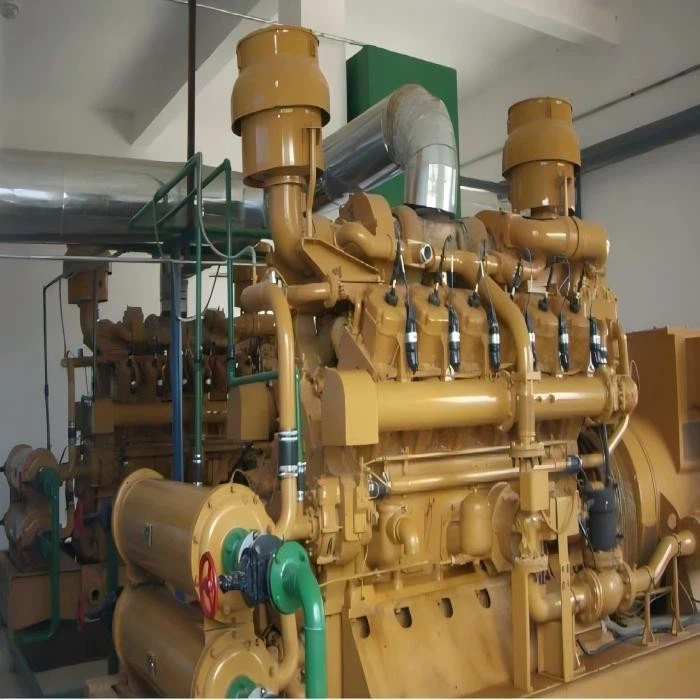
The use of syngas in gas turbines requires careful consideration of the syngas quality and the turbine design. Special combustion chambers and control systems have been developed to ensure stable and efficient combustion of syngas in gas turbines.
Automation and Control Systems
Automation and control systems play a crucial role in the operation of biomass gas generator sets. They ensure the safe, efficient, and reliable operation of the entire system by monitoring and controlling various parameters, such as temperature, pressure, gas flow rate, and power output.
Modern automation systems use advanced sensors and actuators to collect real - time data from the gasifier, syngas cleaning system, and power generation equipment. This data is then processed by a control unit, which adjusts the operating parameters to optimize the performance of the system. For example, the control system can adjust the air - to - biomass ratio in the gasifier to maintain a stable gasification process, or it can regulate the fuel injection in the engine to ensure efficient combustion.
In addition, remote monitoring and control capabilities are becoming increasingly important in the management of biomass gas generator sets. Operators can access the system data and control the equipment remotely using a computer or a mobile device, which improves the convenience and efficiency of system operation and maintenance.
Conclusion
The application of new technologies in biomass gas generator sets has significantly improved their performance, efficiency, and reliability. Advanced gasification technologies, syngas cleaning and conditioning methods, power generation systems, and automation and control systems are all contributing to the development of more sustainable and competitive biomass energy solutions.
As a biomass gas generator set supplier, we are committed to providing our customers with the latest and most advanced technologies in this field. We offer a wide range of products, including 300KW Biomass Generator Set and 500kw Biomass Power Plant, which are designed to meet the diverse needs of our customers.
If you are interested in our biomass gas generator sets or have any questions about biomass energy solutions, please feel free to contact us for further discussion and procurement negotiation. We look forward to working with you to contribute to a cleaner and more sustainable energy future.
References
- Bridgwater, A. V. (2012). Review of fast pyrolysis of biomass and product upgrading. Biomass and Bioenergy, 38, 68 - 94.
- Reed, T. B., & Das, A. (2009). Handbook of biomass downdraft gasifier engine systems. Taylor & Francis.
- Speight, J. G. (2011). Gasification technologies for synthetic fuels and chemicals. Elsevier.


