

Generator Auxiliary Systems
Jinan Jingheng Machinery Equipment Co., Ltd. was established in 2013 and is a high-tech sales and service company in China. The company specializes in the design, installation, operation and maintenance of generator sets and exhaust denitrification projects. In order to meet the diversified needs of customers in terms of power, economy, and environmental protection, the company is committed to providing customers with EPC overall solutions and turnkey projects such as gas comprehensive utilization system, combined heat and power system (CHP), sewage treatment system, and exhaust gas post-treatment.
Why Choose US
Quality Assurance
The company has passed multiple standard system certifications such as ISO9001, ISO14001, and ISO45001, and its products are widely used in more than 20 provinces in China. At the same time, with excellent product quality and high-quality technical services, the company has gained a good reputation in multiple countries in Southeast Asia, Russia, and Africa.
Product Application
Our generator sets are widely used in power generation using various combustible gases such as natural gas, associated petroleum gas, coalbed methane, coal gasification gas, biomass gas, and biogas. They cover all areas of industry demand and are equipped with different types of generator sets to meet the needs and choices of various users.
Production Market
The company has a complete marketing and after-sales service network, and has established a service system that provides services at any time in more than 20 cities in Northeast, Northwest, Southwest, East China, etc. The products are exported to many countries in Africa, Southeast Asia, and Euprope.
Excellent service
We provide comprehensive services and formulate the most appropriate plans based on the unique needs of customers; we provide users with engineering drawings and commissioning training, regular after-sales service, and a 24-hour technical guidance hotline.
-
![Cooling Towers for Diesel Generator Sets]()
Cooling Towers for Diesel Generator Sets
The cooling tower adopts a hyperbolic shape. The tower body is cast with concrete. The tower body is very high and forms a flat-topped cone. The air flow in the tower body relies on the air pressureAdd to Inquiry -
![Horizontal Remote Radiator]()
Horizontal Remote Radiator
Horizontal Remote Radiator is used in traditional fuel or gas engines. The fan is mostly mechanical and directly connected to the engine. It is suitable for large, medium and small generator sets,Add to Inquiry -
![Waste Heat Recovery System]()
Waste Heat Recovery System
Waste Heat Recovery System is a combined heat and power (CHP) or combined heat, power and cooling (CHPC) system. It is a distributed energy supply system that recycles waste heat generated by powerAdd to Inquiry -
![Remote Monitoring for Generator Sets]()
Remote Monitoring for Generator Sets
Remote Monitoring for Generator Sets is a comprehensive system that integrates monitoring, management, alarm and data analysis. It mainly completes real-time data collection and process control ofAdd to Inquiry -
![Power Transmission and Distribution System]()
Power Transmission and Distribution System
The composition of Power Transmission And Distribution System: transmission lines and distribution systems.Add to Inquiry


Types of Generator Auxiliary Systems
There Are Mainly the Following Types

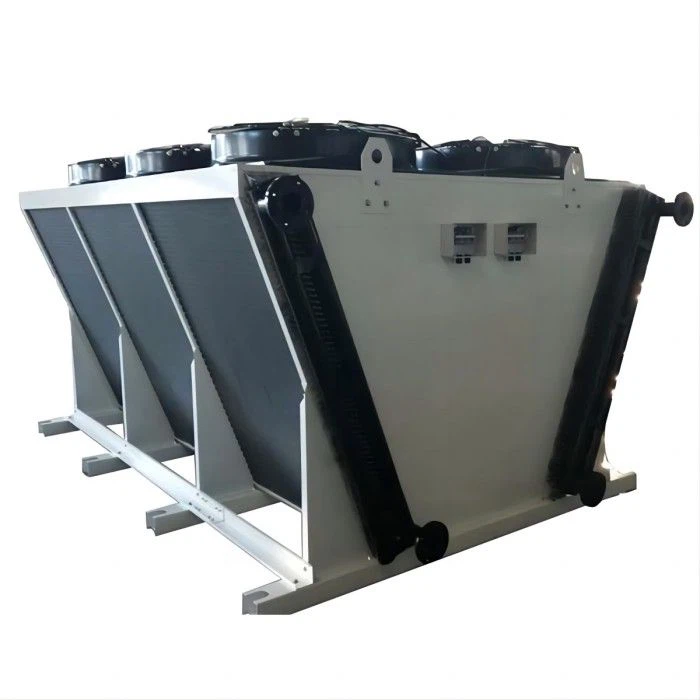


Cooling Towers for Diesel Generator Sets
The cooling tower adopts a hyperbolic shape. The tower body is cast with concrete. The tower body is very high and forms a flat-topped cone. The air flow in the tower body relies on the air pressure difference to drive the wind to enter from the bottom.
Horizontal Remote Radiator
Horizontal Remote Radiator is used in traditional fuel or gas engines. The fan is mostly mechanical and directly connected to the engine. It is suitable for large, medium and small generator sets, such as standby units, silent units and other types and areas with water shortage.
Waste Heat Recovery System
Waste Heat Recovery System is a combined heat and power (CHP) or combined heat, power and cooling (CHPC) system. It is a distributed energy supply system that recycles waste heat generated by power generation and outputs electricity, cooling and heat to users at the same time. The comprehensive energy utilization efficiency can reach more than 80%.
Remote Monitoring for Generator Sets
Remote Monitoring for Generator Sets is a comprehensive system that integrates monitoring, management, alarm and data analysis. It mainly completes real-time data collection and process control of various parameters of generator sets and their auxiliary equipment, and can also exchange data with other systems.
Power Transmission and Distribution System
The composition of Power Transmission And Distribution System: transmission lines and distribution systems.
Advantages of Generator Auxiliary Systems
Cooling Towers for Diesel Generator Sets
Efficient system working: Cooling tower used with water treatment system removes all the hazardous chemicals from water and makes it decontaminated. This keeps the cooling tower parts clean and corrosion-free for a longer time, preparing the system to work at more optimum levels.
Less maintenance required: Due to clean and corrosion-free cooling tower parts, the frequency of the requirement of maintaining a cooling tower is reduced, and the maintenance cost is also reduced.
Life of the system extends: The water treatment system used in the cooling tower doesn't allow the chemicals to deposit, which keeps the system corrosion-free and extends the life of the whole system.
Less energy consumption: With water treatment plants in cooling towers, the water is re-circulated again and again to ensure that the system is clean enough to work at its full capacity and less energy is used to achieve more output.
Horizontal Remote Radiator
Simple Structure: Tube-belt heat exchangers typically consist of tubes and belt-like fins, with a relatively simple structure, resulting in lower manufacturing and maintenance costs.
Good Heat Transfer: The fin design increases the heat dissipation area, enhancing the heat exchange effect and improving overall efficiency.
Durable: Common materials like steel, copper, or aluminum provide excellent corrosion resistance and mechanical strength, making them suitable for harsh environments.
Wide Application: Suitable for various media, such as water, steam, and oil, and widely used in heating, air conditioning, and industrial cooling.
Flexible Installation: Can be designed with different installation methods according to specific needs, making it adaptable to various spaces and installation sites.
Easy Maintenance: Due to its simple structure, disassembly and cleaning are relatively easy, leading to lower daily maintenance costs.
Technical Parameters
Cooling Towers for Diesel Generator Sets
|
Design and Operating Conditions |
Water Distribution System Construction Materials |
||
|
Tower Type: |
Counter Flow Induced Draft |
Stand Pipe: |
PVC |
|
Water Flow Rate (GPM): |
9GPM |
Sprinkler Head: |
Nylon |
|
Entering Water Temperature |
95*F |
Sprinkler Pipes: |
PVC |
|
Leaving Water Temperature |
85*F |
Mechanical Equipment |
|
|
Wet Bulb Temperature: |
75"F |
Fan Unit: |
One Unit per Tower |
|
Total Fan BHP: |
1/6 HP |
Type: |
Axial Flow |
|
Total Pump Head: |
5.0' |
Manufacturer: |
- |
|
Drift Loss of Water Flow: |
0.10% |
Diameter: |
19.5 in |
|
Evaporation Loss of Water Flow: |
0.93% |
Blade Material: |
Nylon |
|
Design Wind Load: |
30.7 Ibs/sq. ft. |
Hub Material: |
Nylon |
|
Structural Details |
Nominal Air Volume: |
883 CFM |
|
|
Overall Diameter: |
27 1/8* |
Fan Motor |
|
|
Overall Height: |
50" |
Number of motors: |
One Unit per Tower |
|
Dry Weight: |
84 Ibs. |
Type: |
Induction |
|
Operating Weight: |
227 lbs. |
Manufacturer: |
CTS |
|
Basic Tower Construction Materials |
Insulation: |
F Class |
|
|
Tower Support Frame Assembly |
- |
Rated HP: |
1/6 HP |
|
Casing: |
FRP |
Voltage and phase: |
110/220V/1 |
|
Casing Supporters |
Nylon |
Piping Connections |
|
|
Cold Water Basin |
FRP |
Primary Water Inlet Diameter |
1.5" |
|
Filling: |
PVC |
Primary Water Outlet Diameter: |
1.5" |
|
Filling Supports: |
PVC |
Auto fill inlet diameter: |
1.5" |
|
Fan Guard |
PP |
Quick fill inlet diameter: |
- |
|
Mechanical Equipment Supports: |
HDGS |
Overflow outlet diameter: |
1" |
|
Inlet Louvers: |
PVC |
Drain diameter: |
3/4" |
|
Bolts, Nuts & Washers: |
STS |
Water Flow (GPM): |
9 GPM |
Horizontal Remote Radiator
|
Motor power |
3kW |
|
Motor voltage |
380V |
|
Motor speed |
1450r/min Flow coefficient: 0.21 |
|
Blade angle |
20° |
|
Blowing/suction volume (flow) |
17560 m2/h |
|
Pressure coefficient |
0.070 Full pressure |
|
228Pa |
|
|
Air efficiency |
0.66 |
|
Used shaft power |
1.67 |
|
Motor noise |
≤78 decibels |
|
Fan blades |
600mm diameter, made of fiberglass, 10 pieces/piece |
|
Electrical control |
Manual: The total power supply is controlled by an 80A three-phase four-wire leakage protector, and a single machine uses a 20A circuit breaker. |
Key Components
Cooling Towers for Diesel Generator Sets
Gearboxes
Gearboxes are available in a number of different reduction rates and styles to support the variable strengths and fan speeds of cooling towers.
Fill media
Fill media is an essential cooling tower element. Most modern cooling towers effectively use plastic fill media for maximum water evaporation. Water is dispersed through the fill, which flattens out into a thin film with a large surface area. This procedure makes it possible for excess moisture and heat to rapidly evaporate.
Drift reducers
Drift reducers are important cooling tower parts that work to eliminate water droplets in the air and recycle the moisture for operational processes. They do this by abruptly forcing the moist air in another direction, separating the moisture from the air and redirecting it to another part of the cooling tower.
Nozzles
Nozzles are most commonly found in crossflow cooling towers, which harness the power of gravity to distribute water. In these kinds of systems, water is lifted up to dispersal reservoirs above the fill media. Gravity then pulls the water through the fill media through nozzles in the bottom of the reservoirs.
Fans
Fans serve the purpose of forcing or pushing air throughout a cooling tower. The fans must be durable enough to stand up to the caustic atmosphere in which they work. They are often pretty noisy, but there are quieter cooling tower fans available. This equipment can be found in counterflow, crossflow, and other mechanical draft cooling towers. Natural air flow cooling towers have no use for fans, as they use natural drafts and water cooling techniques.
Driveshafts
Driveshafts are tailor-made to transfer energy from a cooling tower engine's outflow shaft into the intake shaft of the gear reducer. This process generates a rotating force that turns the fan blades. Driveshafts are available in lengths spanning from two feet in compact AC towers to more than 20 feet in heavy-duty industrial towers. Driveshafts need to be rust-proof because of the corrosive atmospheres they function in.
Air intake louvers
Air intake or inlet louvers prevent the sun's rays from penetrating the water reservoir, which stops mold and algae from forming and reduces chemical expenses. Air intake louvers also prevent water from splashing out of the reservoir. This benefit reduces the amount of water and chemicals needed, while making the reservoir itself easier to access and remove.
Electric float valves
Electric float valves are low-maintenance components that maintain the functionality of your cooling tower for an extended period of time. In most cases, you can find electric float valve kits that come with floats, arms, and valves to accommodate a variety of different tasks.
Reservoir heaters
Reservoir heaters prohibit the water from freezing in a cooling tower reservoir during winter.
Horizontal Remote Radiator
Separation of Cooling System: In a remote radiator setup, the cooling system is separated from the generator and placed in a different location. This allows for flexibility in positioning the radiator, which can be advantageous in situations where there is limited space around the generator or where noise reduction is a concern.
Coolant Circulation: The remote radiator is connected to the generator's cooling system through coolant lines or hoses. The coolant, typically a mixture of water and antifreeze, circulates between the generator and the remote radiator, carrying heat away from the generator's components.
Heat Dissipation: The remote radiator operates on the same principle as a traditional generator radiator. The coolant flows through channels or tubes within the radiator, and ambient air passes over the radiator's fins. The movement of the air facilitates heat transfer, allowing the coolant to release heat and cool down.
Fan or Blower: Remote radiators may incorporate fans or blowers to enhance airflow through the radiator. These fans can be located either at the generator end or the radiator end, depending on the specific design. The fans help ensure proper airflow and efficient heat dissipation from the coolant.
Piping and Connections: The coolant lines or hoses connecting the generator and remote radiator need to be properly sized and routed to facilitate the flow of coolant. Adequate insulation may be required to minimize heat loss from the coolant during transfer.
Packaging & Delivery
|
Package Size |
2000.00cm * 1000.00cm * 1200.00cm |
|
Package Gross Weight |
200.000kg |
Other Services
Packing terms
Generally, we pack our goods in neutral white boxes and brown cartons. If you have legally registered patent, we can pack the goods in your branded boxes after getting your authorization letters.
Payment terms
T/T 30% as deposit, and 70% before delivery. We'll show you the photos of the products and packages before you pay the balance.
Delivery terms
EXW, FOB, CFR, CIF, DDU.
Delivery time
Generally, it will take about 15 days after receiving your advance payment. The specific delivery time depends on the items and the quantity of your order.
After-sales service
We offer Overall managed operation service including Regular after-sales service,24hrs hotline for technical guidance,Working combination between engineers and local staff.
Certificate


As one of the leading generator auxiliary systems manufacturers and suppliers in China, we warmly welcome you to buy generator auxiliary systems for sale here from our factory. All our products are with high quality and competitive price.
generator backup energy generation equipment, generator industrial generation equipment, generator supplementary energy generation equipment