

In the realm of power generation, natural gas generator sets have emerged as a reliable and efficient solution for various applications, from industrial complexes to commercial establishments and even residential backup power. As a dedicated natural gas generator set supplier, I've witnessed firsthand the growing demand for these units. One of the most frequently asked questions by our clients is about the power factor of a natural gas generator set. In this blog post, I'll delve into the concept of power factor, its significance in natural gas generator sets, and how it impacts your power needs.
Understanding Power Factor
Before we dive into the specifics of power factor in natural gas generator sets, let's first understand what power factor is. In an AC electrical system, power factor is a measure of how effectively electrical power is being converted into useful work output. It is expressed as a ratio between the real power (measured in kilowatts, kW) and the apparent power (measured in kilovolt - amperes, kVA).
Mathematically, the power factor (PF) is calculated as:
[PF=\frac{kW}{kVA}]
The value of power factor ranges from 0 to 1. A power factor of 1 (or 100%) indicates that all the electrical power supplied to the load is being used effectively, with no power being wasted. On the other hand, a power factor less than 1 means that some of the electrical power is being used to create and maintain magnetic fields in inductive loads such as motors, transformers, and fluorescent lighting, rather than doing useful work. This "wasted" power is known as reactive power, measured in kilovolt - amperes reactive (kVAR).
Power Factor in Natural Gas Generator Sets
Natural gas generator sets, like all electrical power sources, are rated in kVA. However, the actual useful power output (kW) that can be delivered to the load depends on the power factor. Most natural gas generator sets are designed to operate at a power factor of 0.8. This means that for a generator set rated at, say, 1000 kVA, the maximum real power output it can deliver at a power factor of 0.8 is 800 kW.
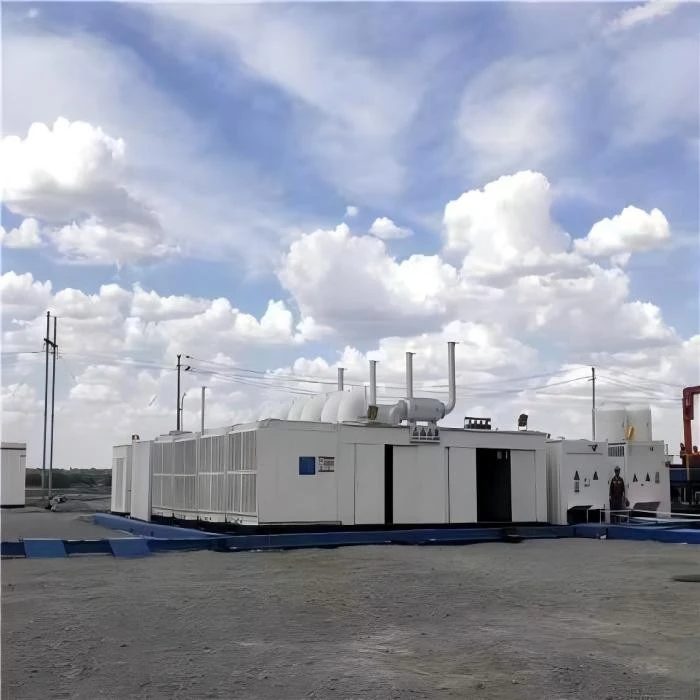

The power factor of a natural gas generator set is influenced by several factors, including the type of load it is supplying. Different types of loads have different power factor characteristics:
- Resistive loads: These loads, such as incandescent lamps and electric heaters, have a power factor of 1. They consume only real power and do not require any reactive power. When a natural gas generator set is supplying a resistive load, it can operate at its maximum efficiency, delivering power at a power factor of 1.
- Inductive loads: Motors, transformers, and other inductive devices have a power factor less than 1. They require reactive power to create and maintain magnetic fields. When a natural gas generator set is supplying an inductive load, it has to supply both real power and reactive power. This reduces the effective power output of the generator set and can lead to increased losses in the electrical system.
- Capacitive loads: Capacitive loads, such as capacitor banks, have a leading power factor. They can be used to compensate for the lagging power factor of inductive loads, improving the overall power factor of the electrical system.
Importance of Power Factor in Natural Gas Generator Sets
The power factor of a natural gas generator set is an important consideration for several reasons:
- Generator sizing: When selecting a natural gas generator set, it is crucial to consider the power factor of the load it will be supplying. If the power factor of the load is low, a larger generator set may be required to ensure that it can supply enough real power to meet the load's demand. For example, if you have a load that requires 1000 kW of real power and has a power factor of 0.7, you would need a generator set rated at approximately 1429 kVA ((1000\div0.7)) to supply the load.
- Energy efficiency: A low power factor can lead to increased energy losses in the electrical system. These losses are dissipated as heat in the conductors, transformers, and other electrical equipment. By improving the power factor, you can reduce these losses and increase the overall energy efficiency of the system. This can result in significant cost savings over the long term, especially for large industrial and commercial applications.
- Equipment performance: A low power factor can also affect the performance of electrical equipment. It can cause voltage drops, overheating, and premature equipment failure. By maintaining a high power factor, you can ensure that your electrical equipment operates reliably and efficiently, reducing the risk of downtime and costly repairs.
Improving Power Factor in Natural Gas Generator Sets
There are several ways to improve the power factor of a natural gas generator set:
- Power factor correction capacitors: Capacitor banks can be installed in the electrical system to compensate for the lagging power factor of inductive loads. These capacitors supply reactive power to the system, reducing the amount of reactive power that the generator set has to supply. This improves the overall power factor of the system and reduces energy losses.
- Load management: By carefully managing the types of loads connected to the natural gas generator set, you can improve the power factor. For example, you can try to balance the use of inductive and capacitive loads, or replace old, inefficient motors with newer, high - efficiency models that have a higher power factor.
- Generator design: Some modern natural gas generator sets are designed with advanced control systems that can automatically adjust the generator's output to optimize the power factor. These systems can monitor the power factor of the load and adjust the generator's excitation system to supply the appropriate amount of reactive power.
Our Natural Gas Generator Sets and Power Factor
As a natural gas generator set supplier, we offer a wide range of high - quality generator sets with different power ratings and power factor characteristics. Our 1500kw Natural Gas Generator, 2000KW Natural Gas Generator, and 700KW Natural Gas Generator Set are designed to operate at a power factor of 0.8, providing reliable and efficient power for a variety of applications.
We understand the importance of power factor in ensuring the optimal performance of your electrical system. Our technical team can assist you in selecting the right generator set for your specific power requirements and help you implement power factor correction measures to improve the efficiency of your system.
Conclusion
The power factor of a natural gas generator set is a critical factor that affects its performance, efficiency, and cost - effectiveness. By understanding the concept of power factor, its significance in natural gas generator sets, and how to improve it, you can make informed decisions when selecting and operating a generator set.
If you are in the market for a natural gas generator set or have any questions about power factor or power generation in general, please feel free to contact us. Our team of experts is ready to assist you in finding the right solution for your power needs. We look forward to the opportunity to work with you and help you achieve reliable and efficient power generation.
References
- Chapman, S. J. (2012). Electric Machinery Fundamentals. McGraw - Hill.
- Grob, B., & Weidner, J. (2007). Basic Electronics. Prentice Hall.
- IEEE Standard 141 - 1993 (Redline). (1993). IEEE Recommended Practice for Electric Power Distribution for Industrial Plants. IEEE.


