

Products


SCR Silencer
Description
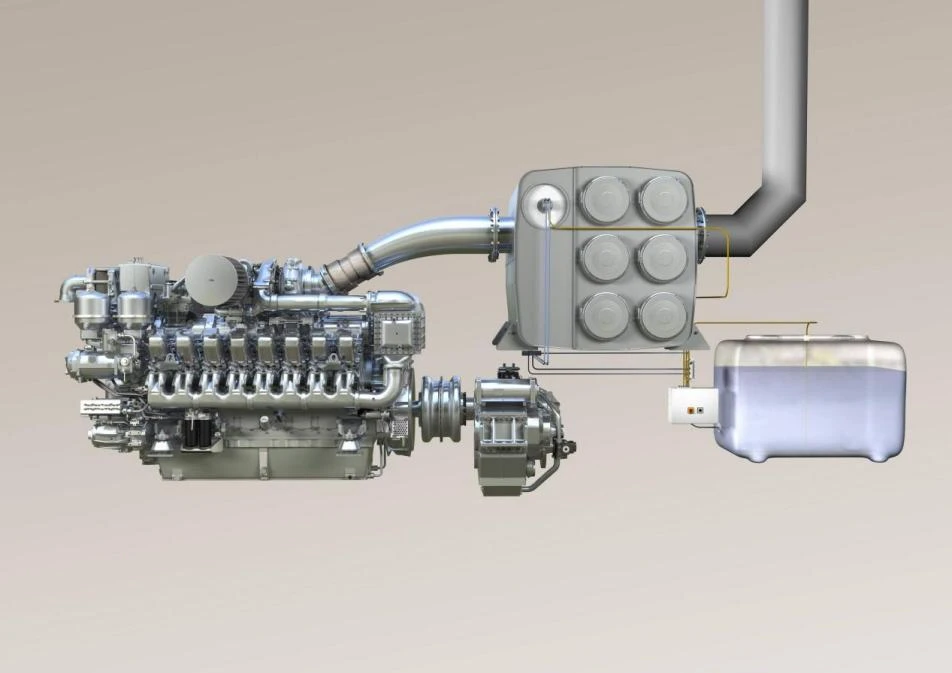
SCR Silencer is a device designed to reduce nitrogen oxides (NOx) in internal combustion engine emissions. The product combines the functions of a catalytic converter and a muffler. By injecting ammonia or urea solution in a compact unit and using a specially formulated catalyst, it promotes the chemical reduction reaction of NOx and converts it into harmless nitrogen and water vapor. The SCR Silencer is equipped with a tortuous muffler pipe with multiple muffler holes in the middle of the pipe. In addition, the SCR Silencer adopts a patented design that integrates the catalytic conversion and exhaust muffler functions into a whole, reducing the footprint.
Features
Efficient noise suppression effect
The working principle of SCR Silencer includes two methods: resistive muffler and reflective muffler, or a combination of the two (i.e., impedance composite muffler). Resistive mufflers consume noise by converting the energy of sound waves into heat energy in the pores of porous sound-absorbing materials, while reflective mufflers reflect sound waves through sudden changes in the pipe cross-section or the break of acoustic impedance, thereby achieving the purpose of muffler. This multiple silencer mechanism enables the SCR silencer to choose the appropriate silencer method when facing noises of different frequencies, thereby achieving excellent noise suppression effects.
Strong corrosion resistance
Since SCR silencers are usually used in denitration systems that require high temperature and high pressure, the working environment is very harsh, so its materials must have strong corrosion resistance. Mufflers usually use high temperature resistant and corrosion resistant metal materials (such as stainless steel or high alloy materials), which can operate stably for a long time in high temperature, humid or chemical corrosion environments. This corrosion resistance ensures the service life of the muffler, reduces the maintenance frequency, and thus improves the overall reliability and efficiency of the system.
Improve system efficiency and stability
SCR silencers can not only reduce noise, but also improve the working efficiency of the denitration system by improving the smoothness of the airflow. The design of the silencer optimizes the exhaust flow and reduces the resistance in the pipeline, so that the gas flow is smoother, which helps to improve the stability and operating efficiency of the entire denitration system. Compared with systems without silencers, systems equipped with SCR silencers can maintain good emission control effects with lower energy consumption and less maintenance requirements.
Strong adaptability
SCR mufflers are very adaptable and can be customized according to different denitration system requirements. According to the type, scale and actual working conditions of the emission system (such as flow, temperature, pressure, etc.), the size, shape and structure of the SCR muffler can be flexibly customized to adapt to different types of SCR systems. It is also possible to choose a suitable muffler structure according to different noise control requirements, such as a single resistive or reflective design, or a composite muffler structure to cope with noise of different frequencies. The modular design allows the system to be adjusted according to specific needs to achieve the best noise control effect.
FAQ
Q: What is the main function of the SCR muffler?
A: The main function of the SCR muffler is to reduce the noise generated in the SCR denitration system. It reduces the noise generated by the airflow in the exhaust duct through resistive and reflective muffler technology, ensuring that the system does not cause excessive noise pollution to the environment and personnel during operation.
Q: What types of emission systems are SCR mufflers suitable for?
A: SCR mufflers are widely used in diesel engines, heavy machinery, commercial vehicles and various industrial emission systems, especially those that require strict control of nitrogen oxide (NOx) emissions. It is suitable for most SCR denitrification systems and improves emission compliance through effective noise control.
Q: How does the SCR muffler reduce noise?
A: The SCR muffler reduces noise through two main working principles: resistive muffler principle and reflective muffler principle. Resistive mufflers use porous sound-absorbing materials (such as sound-absorbing cotton or ceramic materials) to convert sound wave energy into heat energy and consume noise; reflective mufflers reflect sound waves and interfere with noise through changes in pipe cross-section or acoustic impedance, thereby reducing the propagation of sound. This dual muffler technology ensures that noise in different frequency bands can be effectively suppressed.
Q: Is the material of the SCR muffler suitable for high-temperature environments?
A: SCR mufflers are usually made of high-temperature resistant stainless steel or high-corrosion-resistant alloy materials, which can withstand exhaust gas temperatures of up to 500°C or even higher. The temperature resistance and corrosion resistance of its internal and external materials ensure the long-term stability of the muffler in harsh environments. The surface of the muffler may also be coated with an anti-corrosion coating to further enhance its corrosion resistance and extend its service life.
Q: Can the SCR muffler be customized according to needs?
A: Yes, SCR silencers are highly adaptable and can be customized to meet the needs of different emission systems. Whether it is for different exhaust flow, temperature, pressure, or different noise frequencies, the silencer can be adjusted according to specific requirements to ensure its optimal effect. The modular design allows the silencer to adapt to various types of SCR denitrification systems, providing tailored noise suppression solutions.
Q: How does the SCR silencer affect the performance of the exhaust system?
A: Designed with full consideration of airflow optimization, the SCR silencer can reduce the airflow resistance of the exhaust system and ensure smoother gas flow. By reducing the exhaust back pressure, the silencer helps to improve the efficiency and stability of the SCR system and reduce the energy consumption of the engine. By optimizing the airflow, the silencer not only reduces the energy consumption of the exhaust system, but also improves the overall performance of the denitrification system, ensuring that the SCR system operates efficiently while reducing energy waste.
Q: Is the installation of the SCR silencer complicated?
A: The installation process of the SCR silencer is relatively simple. Due to its compact structure and modular design, the silencer can be quickly connected to the existing emission system, reducing additional installation and commissioning costs. In most cases, only a few adjustments are required to complete the installation, and the staff can quickly perform maintenance and replacement during the subsequent maintenance process.
Q: Do SCR mufflers require high maintenance?
A: SCR mufflers require low maintenance. The muffler is made of highly corrosion-resistant materials and structural design, and can operate for a long time in a high-temperature and highly corrosive working environment without frequent maintenance. Regularly check the cleanliness of the muffler and check for carbon deposits or blockages. In most cases, no major repairs are required.
Q: Can SCR mufflers reduce noise pollution from vehicles or equipment?
A: Yes, SCR mufflers can reduce noise pollution from vehicles or industrial equipment, especially when used in cities or near residential areas. Reducing noise pollution is an important measure to ensure equipment compliance and enhance corporate social responsibility. Using SCR mufflers not only helps to comply with regulations, but also improves the corporate image and enhances public trust in the company.
Q: Are SCR mufflers suitable for all emission systems?
A: Although SCR mufflers can be used in most SCR denitrification systems, the specific applicability depends on the type and configuration of the emission system. To ensure the best results, it is recommended to confirm the compatibility of the muffler with the emission system before purchase. For different exhaust flow, temperature and noise requirements, the muffler can be customized to provide the best noise suppression effect.
Q: Does the SCR muffler affect the emission efficiency of the SCR system?
A: The design of the SCR muffler does not affect the emission efficiency of the SCR system. On the contrary, by reducing the noise in the exhaust and optimizing the airflow, the muffler helps to improve the stability and overall performance of the system. The SCR muffler mainly acts on noise control and has no negative impact on the NOx reduction efficiency.
Q: Do other components of the emission system need to be adjusted after using the SCR muffler?
A: After using the SCR muffler, it is usually not necessary to adjust other components of the emission system. The muffler is designed to be compatible with the existing emission system, and improves the efficiency and stability of the exhaust system by reducing noise and optimizing airflow. If a customized muffler is used, the manufacturer will ensure that it is perfectly connected with other components of the emission system and will not affect the overall performance of the system.
Hot Tags: scr silencer, China scr silencer manufacturers, suppliers, factory, SCR Bypass System, SCR Soot Blower, scr post processing accessories, SCR Silencer, SCR Control System


