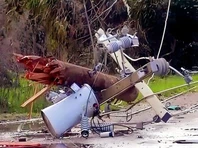
Recently, Spain and Portugal suffered a large-scale power outage. Major cities such as Madrid, Barcelona, and Lisbon were cut off from power. The Iberian Peninsula was plunged into darkness. The power outage even affected parts of southern France, affecting about 60 million people. The power outage caused serious consequences such as large-scale traffic paralysis and communication interruption. Many hospitals even activated backup generators to maintain operations. This is one of the most serious power outages in Europe in the past 20 years. Spanish Prime Minister Pedro Sanchez described it as "an unprecedented event". The power outage exposed the vulnerability and safety risks of the European energy system in the context of the rapid development of renewable energy.
Beijing's Economic Daily reported that after the accident, Spain and Portugal urgently launched a joint investigation to find out the cause of the power outage. According to a preliminary report from Spanish power grid operator Red Electric Group (REE), the large-scale power outage was caused by a sudden and sharp drop in power supply. At noon on the day of the accident, the power grid lost 15 GW of power generation capacity in just 5 seconds, equivalent to 60% of Spain's national electricity demand at the time. Such a large-scale power supply reduction exceeded the scope of the European power grid design, directly causing the cross-border transmission line between Spain and France to trip and disconnect. As a result, the Iberian Peninsula power system was out of sync with the European main grid, and a serious supply and demand imbalance occurred within the Spanish-Portuguese power grid, leading to voltage collapse and a complete power outage.
At present, relevant departments of the two countries are still investigating the underlying causes of the power supply drop, and only preliminarily ruled out the possibility of cyber attacks and extreme weather. It is worth noting that this catastrophic power outage occurred 6 days after Spain just celebrated its national grid "for the first time to achieve 100% renewable energy power supply on a working day", which triggered public opinion to question the stability and feasibility of Europe's energy transformation.
In recent years, Spain and Portugal have vigorously promoted energy transformation, and the proportion of clean energy in electricity supply has repeatedly reached new highs. In 2024, more than 56% of the two countries' electricity generation will come from renewable energy, including wind, solar, hydropower, etc. If nuclear energy is added, about 82% of the electricity in the two countries will be clean. The high proportion of wind and solar energy has made the Iberian Peninsula one of the pioneers of green energy in Europe, but it also puts higher requirements on the stable regulation of the power system. The intermittent and weak inertia characteristics of renewable energy make the power grid more vulnerable to disturbances. Wind turbines and photovoltaic inverters are not like traditional coal-fired and gas-fired units that can provide system inertia through large rotating machinery. Once the power grid is impacted, the frequency change is more likely to get out of control. As the International Energy Agency pointed out, a high proportion of variable energy will bring sub-second stability operation and maintenance challenges. If there is a lack of corresponding flexible adjustment resources to balance, when the output of wind or solar power generators increases or decreases suddenly, the power grid may exceed the voltage or frequency limit. At present, the energy storage and standby regulation capacity of the Spanish power system is relatively insufficient. Energy storage such as pumped storage power stations and batteries only accounts for about 2.65% of the total installed capacity. This low proportion means that when the output of renewable energy fluctuates greatly, the energy storage buffer that can be quickly deployed in the system is very limited.
In addition, this power outage highlights the weakness of the European power interconnection network. The power grids of Spain and Portugal are closely connected to each other, but due to the geographical barriers of the Pyrenees Mountains, cross-border connections with the European continent are relatively limited. For many years, the Spanish and Portuguese power grids have only a few transmission channels connected to neighboring countries such as France, with a total interconnection capacity of only about 3,977 megawatts, accounting for about 3% of Spain's installed capacity, which is far below the 15% target set in the EU's energy and climate change policy framework by 2030. The Iberian Peninsula is almost equivalent to an "energy island" in the European power grid - the two countries are basically self-sufficient in electricity in normal times, but it is difficult to get enough support from the European continent when encountering a crisis. In this power outage, the failure of the Spanish-French cross-border interconnection line instantly isolated the Iberian Peninsula power grid from other parts of Europe, losing the buffer of external power support. When the internal balance is broken, the isolated peninsula power grid can only bear the impact alone, and is therefore more likely to collapse completely.
The Spanish and Portuguese power outage exposed the potential structural risks in the process of Europe's energy transformation, and also sounded the alarm for the European energy system. In response to the challenges of climate change and geopolitical risks, European countries are vigorously promoting the transition from fossil energy to renewable energy. The power system is undergoing the largest structural transformation in a century: from centralized and controllable fossil energy power plants to decentralized and difficult to precisely control wind and solar energy. Although this transformation is clean and environmentally friendly, it is difficult to ensure its "reliability" during the transition period. At the same time, energy policy goals at the European level have put the power system under pressure to accelerate change. The EU has raised the statutory target of renewable energy accounting for terminal energy consumption from 32% to at least 42.5% in 2030, which means that in the next few years, Europe needs to double the installed capacity and output of wind power and photovoltaic power generation than in the past. If the grid infrastructure, dispatching strategies and market mechanisms cannot evolve synchronously, then the huge changes in the energy structure may bury systemic risks.
European energy experts said that the power outage on the Iberian Peninsula was a stress test for the high-proportion clean energy grid, reminding people that power supply security should not be ignored while pursuing climate goals. Only by simultaneously promoting grid modernization, energy storage layout and European energy infrastructure integration can Europe ensure that such large-scale power outages will not occur again while achieving climate goals, and truly achieve a win-win situation for clean energy transformation and energy security.