

In the contemporary era, the pursuit of sustainable and efficient energy solutions has become a global imperative. Biogas sewage treatment has emerged as a promising technology that not only addresses environmental concerns related to sewage management but also generates renewable energy in the form of biogas. As a supplier of Biogas Sewage Treatment, I have witnessed firsthand the potential of this technology. One of the key questions that often arises is whether biogas sewage treatment can be integrated with other energy systems. In this blog post, I will explore this topic in detail, examining the feasibility, benefits, and challenges of such integration.
Understanding Biogas Sewage Treatment
Biogas sewage treatment is a process that involves the anaerobic digestion of organic matter present in sewage. During anaerobic digestion, microorganisms break down the organic materials in the absence of oxygen, producing biogas, which is primarily composed of methane and carbon dioxide. This biogas can be used as a renewable energy source for various applications, such as electricity generation, heating, and cooking.
The process of biogas sewage treatment typically involves several stages. First, the sewage is collected and pre - treated to remove large solids and debris. Then, it is fed into an anaerobic digester, where the anaerobic microorganisms convert the organic matter into biogas. The biogas is then purified to remove impurities such as hydrogen sulfide, and it can be stored or directly used. The remaining digestate, which is a nutrient - rich by - product, can be used as a fertilizer in agriculture.
Feasibility of Integration with Other Energy Systems
The integration of biogas sewage treatment with other energy systems is indeed feasible and has been successfully implemented in many parts of the world. There are several ways in which this integration can be achieved.
Integration with Biomass Gasification Systems
Biomass gasification is a process that converts solid biomass into a combustible gas called syngas. Ancillary Equipment for Biomass Gasification can be used to enhance the efficiency of this process. Biogas from sewage treatment can be combined with syngas from biomass gasification. This combination can increase the overall energy output and improve the quality of the fuel. Since both biogas and syngas are renewable energy sources, their integration can contribute to a more sustainable energy mix.
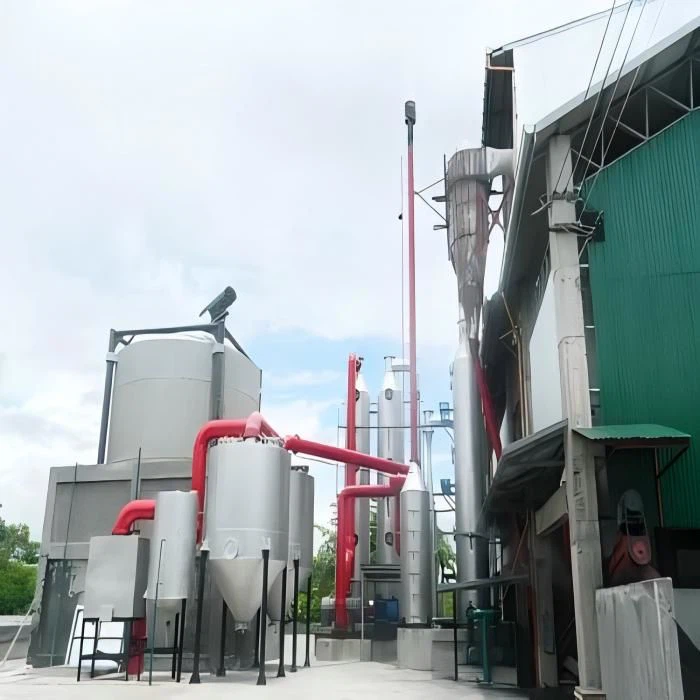

For example, in some biomass power plants, biogas from sewage treatment is injected into the syngas stream before combustion. This not only increases the calorific value of the fuel but also helps in reducing the emissions of pollutants such as particulate matter and nitrogen oxides. The integration also allows for better utilization of available resources, as sewage and biomass are often abundant in many regions.
Integration with Solar and Wind Energy Systems
Solar and wind energy are intermittent energy sources, meaning their power generation depends on weather conditions. Biogas sewage treatment can provide a stable and continuous source of energy to complement solar and wind power. During periods when solar and wind energy production is low, biogas can be used to meet the energy demand.
In a hybrid energy system, biogas - powered generators can be connected to the same electrical grid as solar panels and wind turbines. When the solar and wind energy output is sufficient, the biogas generators can be put on standby. However, when there is a shortage of solar or wind energy, the biogas generators can be activated to supply electricity. This integration helps in ensuring a reliable and stable energy supply.
Integration with Combined Heat and Power (CHP) Systems
Combined Heat and Power (CHP) systems, also known as cogeneration systems, simultaneously produce electricity and useful heat from a single energy source. Biogas from sewage treatment can be used as a fuel in CHP systems. The electricity generated can be used to power the sewage treatment plant itself or sold to the grid, while the heat can be used for heating the anaerobic digester or other processes within the plant.
This integration is highly efficient as it maximizes the utilization of the energy content of biogas. Instead of wasting the heat generated during electricity production, it is put to good use, reducing the overall energy consumption and costs.
Benefits of Integration
The integration of biogas sewage treatment with other energy systems offers numerous benefits.
Environmental Benefits
By integrating biogas sewage treatment with other renewable energy systems, we can significantly reduce greenhouse gas emissions. Biogas is a renewable energy source that, when used instead of fossil fuels, can help in mitigating climate change. Additionally, the integration of different renewable energy sources promotes a more diverse and sustainable energy mix, reducing our dependence on non - renewable resources.
For example, when biogas is combined with syngas from biomass gasification, the overall carbon footprint of the energy production process is reduced. Similarly, when biogas is used to complement solar and wind energy, it helps in ensuring a continuous supply of clean energy without relying on fossil - fuel - based backup power.
Economic Benefits
Integrating biogas sewage treatment with other energy systems can lead to cost savings. For instance, in a CHP system, the simultaneous production of electricity and heat increases the overall energy efficiency, reducing the energy costs for the sewage treatment plant. The excess electricity generated can be sold to the grid, providing an additional source of revenue.
In the case of integration with biomass gasification, the combined fuel can be more cost - effective than using either biogas or syngas alone. The shared infrastructure and resources between different energy systems can also lead to economies of scale, reducing the capital and operating costs.
Energy Security Benefits
The integration of biogas sewage treatment with other energy systems enhances energy security. Since biogas production from sewage is relatively stable and can be controlled, it provides a reliable source of energy. When combined with other renewable energy sources such as solar and wind, it helps in reducing the vulnerability to fluctuations in energy supply caused by weather conditions or geopolitical issues.
Challenges of Integration
Despite the many benefits, there are also some challenges associated with the integration of biogas sewage treatment with other energy systems.
Technical Challenges
Integrating different energy systems requires advanced technical expertise. For example, combining biogas with syngas from biomass gasification requires careful control of the fuel mixture to ensure efficient combustion. The purification of biogas and syngas to meet the requirements of the integrated system can also be technically challenging.
In the case of integrating biogas - powered CHP systems with the electrical grid, there are issues related to power quality and grid connection. The electrical output of the CHP system needs to be synchronized with the grid frequency and voltage, which requires sophisticated control systems.
Regulatory Challenges
There are often regulatory hurdles that need to be overcome when integrating different energy systems. Different energy sources may be subject to different regulations regarding production, storage, and distribution. For example, selling excess electricity generated from biogas - powered CHP systems to the grid may require compliance with complex grid - connection regulations and tariffs.
Social and Perception Challenges
There may be social and perception challenges associated with the integration of biogas sewage treatment with other energy systems. Some people may have concerns about the safety and reliability of these integrated systems. For example, the odor associated with biogas production or the potential for noise from biogas - powered generators may be a concern for nearby communities.
Conclusion
In conclusion, biogas sewage treatment can be effectively integrated with other energy systems. The feasibility of integration has been demonstrated in many real - world applications, and the benefits in terms of environmental protection, economic savings, and energy security are significant. However, there are also challenges that need to be addressed, including technical, regulatory, and social issues.
As a supplier of Biogas Sewage Treatment, I am committed to working with our customers to overcome these challenges and promote the integration of biogas sewage treatment with other energy systems. If you are interested in exploring the possibilities of integrating biogas sewage treatment into your energy system, I encourage you to reach out to us for further discussion and procurement. We have the expertise and experience to help you design and implement a customized solution that meets your specific needs.
References
- Anaerobic Digestion Association. (2023). Biogas Technology Handbook.
- International Renewable Energy Agency (IRENA). (2022). Renewable Energy Integration: Challenges and Opportunities.
- World Bank. (2021). Sustainable Energy for All: The Role of Biogas.


