

As a supplier of sewage treatment equipment, I often encounter questions from clients regarding the capabilities of our systems, particularly about their effectiveness in removing heavy metals from wastewater. Heavy metals such as lead, mercury, cadmium, chromium, and arsenic are common contaminants in industrial and municipal sewage. Their presence poses significant risks to human health and the environment, making their removal a critical aspect of sewage treatment. In this blog, I will explore the mechanisms by which sewage treatment equipment can remove heavy metals and discuss the factors that influence their efficiency.
Mechanisms of Heavy Metal Removal in Sewage Treatment Equipment
Chemical Precipitation
One of the most widely used methods for heavy metal removal is chemical precipitation. This process involves adding chemicals to the wastewater to form insoluble metal precipitates. For example, hydroxide precipitation is a common technique where a base such as lime (calcium hydroxide) or sodium hydroxide is added to raise the pH of the wastewater. At high pH values, many heavy metals form insoluble hydroxides that can be easily separated from the water through sedimentation or filtration.
Another form of chemical precipitation is sulfide precipitation. Sulfide reagents such as sodium sulfide or hydrogen sulfide are added to the wastewater, reacting with heavy metals to form insoluble metal sulfides. Sulfide precipitation is often more effective than hydroxide precipitation for certain heavy metals, such as mercury and cadmium, as metal sulfides have lower solubility products.
Adsorption
Adsorption is another important mechanism for heavy metal removal. Adsorbents such as activated carbon, zeolites, and biochar have high surface areas and can attract and bind heavy metal ions through physical or chemical interactions. Activated carbon, for instance, is a porous material with a large number of active sites that can adsorb heavy metals through van der Waals forces, electrostatic attraction, and chemical bonding.
Zeolites are natural or synthetic aluminosilicate minerals with a unique crystal structure that allows them to selectively adsorb heavy metal ions. They have a high cation exchange capacity, which means they can exchange cations in their structure with heavy metal ions in the wastewater. Biochar, a carbon-rich material produced from the pyrolysis of biomass, has also shown potential as an adsorbent for heavy metals due to its high surface area and surface functional groups.
Ion Exchange
Ion exchange is a process in which ions in the wastewater are exchanged for other ions of the same charge on an ion exchange resin. Ion exchange resins are typically made of synthetic polymers with functional groups that can attract and bind specific ions. For heavy metal removal, cation exchange resins are commonly used to exchange heavy metal cations for less harmful cations such as sodium or hydrogen.
Ion exchange is a highly selective process and can achieve high removal efficiencies for specific heavy metals. However, the resin needs to be regenerated periodically to restore its ion exchange capacity, which involves using a regenerant solution to displace the adsorbed heavy metal ions.
Membrane Filtration
Membrane filtration technologies such as reverse osmosis (RO), nanofiltration (NF), and ultrafiltration (UF) can also be used to remove heavy metals from wastewater. These membranes have pores of different sizes that can selectively separate heavy metal ions and other contaminants from the water.
Reverse osmosis is the most effective membrane filtration technique for heavy metal removal as it can remove almost all dissolved solids, including heavy metal ions. Nanofiltration is less restrictive than reverse osmosis and can remove divalent and multivalent heavy metal ions while allowing monovalent ions to pass through. Ultrafiltration is mainly used for the removal of larger particles and colloids, but it can also remove some heavy metal complexes.
Factors Affecting the Efficiency of Heavy Metal Removal
Heavy Metal Concentration and Speciation
The concentration and speciation of heavy metals in the wastewater can significantly affect the efficiency of removal. Higher initial concentrations of heavy metals may require more treatment steps or larger amounts of treatment chemicals. Additionally, the chemical form of the heavy metals, such as their oxidation state and complexation with other substances, can influence their reactivity and removal efficiency. For example, some heavy metals may form stable complexes with organic ligands, making them more difficult to remove by precipitation or adsorption.
pH and Temperature
pH and temperature are important factors that can affect the performance of sewage treatment equipment for heavy metal removal. As mentioned earlier, pH plays a crucial role in chemical precipitation processes. The optimal pH for hydroxide precipitation varies depending on the type of heavy metal, and maintaining the appropriate pH range is essential for achieving high removal efficiencies. Temperature can also affect the rate of chemical reactions and the adsorption capacity of adsorbents. In general, higher temperatures can increase the reaction rate but may also decrease the adsorption capacity of some adsorbents.
Presence of Other Contaminants
The presence of other contaminants in the wastewater can interfere with the removal of heavy metals. For example, organic matter can compete with heavy metal ions for adsorption sites on adsorbents or form complexes with heavy metals, reducing their availability for removal. Inorganic anions such as chloride, sulfate, and carbonate can also affect the precipitation and adsorption processes by forming soluble complexes with heavy metals or altering the surface properties of adsorbents.
Type and Design of Treatment Equipment
The type and design of the sewage treatment equipment can have a significant impact on the efficiency of heavy metal removal. Different treatment technologies have different capabilities and limitations, and the selection of the appropriate equipment depends on the specific characteristics of the wastewater and the required treatment objectives. Additionally, the design of the treatment system, such as the reactor configuration, residence time, and mixing conditions, can affect the contact between the treatment chemicals or adsorbents and the heavy metal ions, thereby influencing the removal efficiency.
Case Studies and Examples
To illustrate the effectiveness of sewage treatment equipment in removing heavy metals, let's look at some case studies. A manufacturing plant producing electronic components was facing high levels of copper and nickel in its wastewater. The plant installed a chemical precipitation system using lime and a coagulant to precipitate the heavy metals. After the treatment, the copper and nickel concentrations were reduced from several hundred milligrams per liter to less than 1 milligram per liter, meeting the regulatory discharge limits.
Another example is a municipal wastewater treatment plant that implemented an adsorption system using activated carbon to remove heavy metals such as lead and cadmium. The system was able to achieve removal efficiencies of over 90% for both lead and cadmium, significantly reducing the heavy metal load in the treated effluent.
Our Company's Sewage Treatment Equipment for Heavy Metal Removal
At our company, we offer a range of sewage treatment equipment that is specifically designed to remove heavy metals from wastewater. Our Ancillary Equipment for Biomass Gasification can be integrated into existing treatment systems to enhance the removal of heavy metals through chemical precipitation and adsorption processes. Our Biogas Sewage Treatment systems also have the potential to remove heavy metals through biological processes and the use of adsorbents.
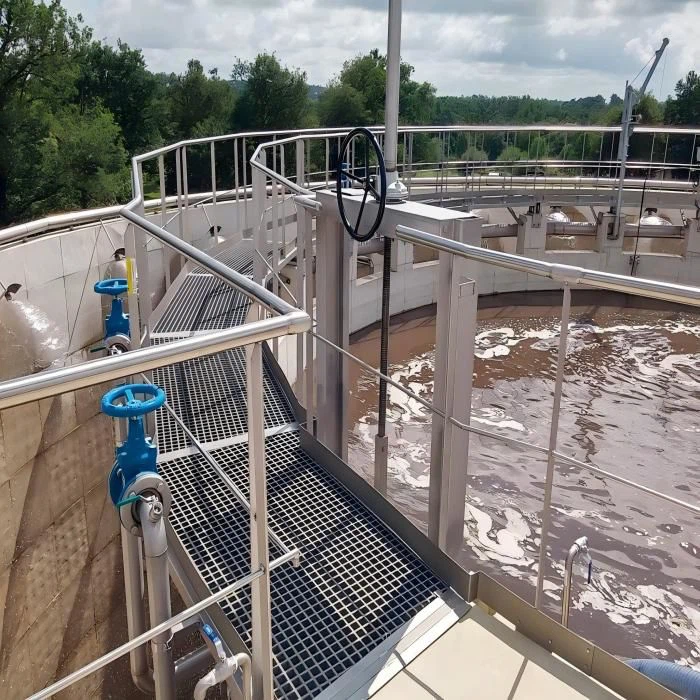

Our equipment is designed with advanced technologies and high-quality materials to ensure reliable and efficient operation. We also provide customized solutions based on the specific needs of our clients, taking into account the characteristics of the wastewater, the required treatment objectives, and the budget constraints.
Conclusion
In conclusion, sewage treatment equipment can effectively remove heavy metals from wastewater through various mechanisms such as chemical precipitation, adsorption, ion exchange, and membrane filtration. However, the efficiency of heavy metal removal depends on several factors, including the heavy metal concentration and speciation, pH and temperature, presence of other contaminants, and the type and design of the treatment equipment.
As a leading supplier of sewage treatment equipment, we are committed to providing our clients with high-quality solutions for heavy metal removal. Our equipment is designed to meet the strictest environmental regulations and to ensure the safety and sustainability of wastewater treatment. If you are interested in learning more about our products or have any questions regarding heavy metal removal in sewage treatment, please do not hesitate to contact us for a consultation and procurement discussion.
References
- Metcalf & Eddy. (2014). Wastewater Engineering: Treatment and Resource Recovery. McGraw-Hill Education.
- Crini, G. (2006). Non-conventional low-cost adsorbents for dye removal: A review. Bioresource Technology, 97(1), 1061-1085.
- Foo, K. Y., & Hameed, B. H. (2010). Insights into the modeling of adsorption isotherm systems. Chemical Engineering Journal, 156(1), 2-10.


