

As a supplier of sewage treatment equipment, I've witnessed firsthand the transformative impact of mobile sewage treatment equipment in various settings. Mobile sewage treatment equipment is designed to address the dynamic and often urgent wastewater treatment needs across different industries and locations. In this blog, I'll explore the key features that make this equipment an invaluable asset in the field of sewage treatment.
Portability and Mobility
One of the most distinctive features of mobile sewage treatment equipment is its portability. Unlike traditional fixed - site sewage treatment plants, mobile units can be easily transported to different locations. This is particularly beneficial in situations where there is a temporary or emergency need for sewage treatment. For example, at construction sites, large - scale events such as music festivals or sports games, or in disaster - affected areas. The ability to quickly deploy the equipment means that wastewater can be treated on - site without the need for complex infrastructure development.
The mobility also allows for flexibility in responding to changing treatment requirements. If a particular area experiences a sudden increase in sewage volume due to population growth or industrial expansion, the mobile unit can be relocated to meet the new demand. This adaptability is a significant advantage over stationary treatment systems, which are often difficult and costly to modify or relocate.
Compact Design
Mobile sewage treatment equipment typically features a compact design. This is essential for its portability, as it allows the equipment to be easily transported on trucks or trailers. Despite its small size, modern mobile units are engineered to provide high - performance treatment. They incorporate advanced technologies in a relatively small footprint, making them suitable for use in areas with limited space.
In urban environments, where land is scarce, the compact nature of mobile equipment enables sewage treatment to be carried out in close proximity to the source of wastewater. This reduces the need for extensive sewer networks, which can be expensive to install and maintain. Additionally, the compact design also simplifies the installation process, as it requires less preparation and space compared to larger, fixed - site treatment plants.
Modular Construction
Another important feature of mobile sewage treatment equipment is its modular construction. The equipment is typically built in standardized modules that can be easily assembled and disassembled. This modular approach offers several benefits. Firstly, it allows for easy customization. Depending on the specific treatment requirements, different modules can be combined to create a system that is tailored to the needs of the client. For example, if a higher level of treatment is required for industrial wastewater, additional filtration or chemical treatment modules can be added.
Secondly, modular construction simplifies maintenance and repair. If a particular module malfunctions, it can be easily replaced or repaired without disrupting the entire system. This reduces downtime and ensures continuous operation of the sewage treatment process. Moreover, the modular design also facilitates upgrades. As new treatment technologies become available, old modules can be replaced with more advanced ones, allowing the equipment to keep up with the latest industry standards.
Advanced Treatment Technologies
Mobile sewage treatment equipment incorporates a range of advanced treatment technologies to ensure effective removal of contaminants from wastewater. These technologies include biological treatment processes, such as activated sludge systems and membrane bioreactors (MBRs). Biological treatment uses microorganisms to break down organic matter in the wastewater, converting it into harmless substances such as carbon dioxide and water.
MBRs, in particular, are becoming increasingly popular in mobile treatment units. They combine the traditional activated sludge process with membrane filtration, resulting in a higher quality of treated water. The membranes used in MBRs have very small pores, which can effectively remove suspended solids, bacteria, and even some viruses from the wastewater. This makes the treated water suitable for reuse in various applications, such as irrigation or industrial processes.
In addition to biological treatment, mobile equipment may also include physical and chemical treatment processes. For example, sedimentation tanks are used to remove large particles from the wastewater, while chemical dosing systems can be used to adjust the pH level or add disinfectants. These combined treatment processes ensure that the treated water meets the required quality standards.
Remote Monitoring and Control
Many modern mobile sewage treatment units are equipped with remote monitoring and control systems. These systems allow operators to monitor the performance of the equipment in real - time from a central location. Using sensors and communication technologies, data such as flow rate, pH level, dissolved oxygen, and pollutant concentrations can be continuously monitored.
Remote monitoring enables early detection of potential problems, such as equipment malfunctions or abnormal treatment performance. Operators can then take immediate action to address these issues, reducing the risk of system failures and environmental pollution. Additionally, remote control capabilities allow operators to adjust the operation of the equipment without being physically present at the site. This is particularly useful in situations where access to the treatment site is difficult or dangerous.
Energy Efficiency
Energy efficiency is a crucial consideration in sewage treatment, and mobile equipment is no exception. Manufacturers are constantly developing new technologies to reduce the energy consumption of mobile sewage treatment units. For example, some units use energy - recovery systems, which capture and reuse the energy generated during the treatment process. This can significantly reduce the overall energy requirements of the equipment.
Advanced aeration systems are also being used to improve energy efficiency. These systems are designed to provide the optimal amount of oxygen to the biological treatment process, minimizing energy waste. Additionally, the use of energy - efficient pumps and motors further contributes to reducing the energy consumption of the equipment. By lowering energy costs, mobile sewage treatment equipment becomes more economically viable for a wider range of applications.
Cost - Effectiveness
Overall, mobile sewage treatment equipment offers significant cost - effectiveness. The initial investment in mobile equipment is generally lower compared to fixed - site treatment plants. This is due to the reduced construction and installation costs associated with the compact and modular design. Additionally, the lower operating costs, including energy savings and reduced maintenance requirements, contribute to the long - term cost - effectiveness of the equipment.
The ability to quickly deploy mobile equipment also results in cost savings. In emergency situations, such as natural disasters, the rapid installation of mobile treatment units can prevent the spread of water - borne diseases and environmental damage, which can be extremely costly in the long run. Moreover, the flexibility of mobile equipment allows for more efficient use of resources, as it can be moved to different locations as needed, maximizing its utilization.
Biogas and Ancillary Equipment Integration
Some mobile sewage treatment equipment is designed to integrate with Biogas Sewage Treatment systems. During the biological treatment process, anaerobic digestion can produce biogas, which is a renewable energy source. By capturing and utilizing this biogas, the mobile treatment system can become more self - sufficient in terms of energy. The biogas can be used to power the equipment itself or can be sold as a source of energy, providing an additional economic benefit.
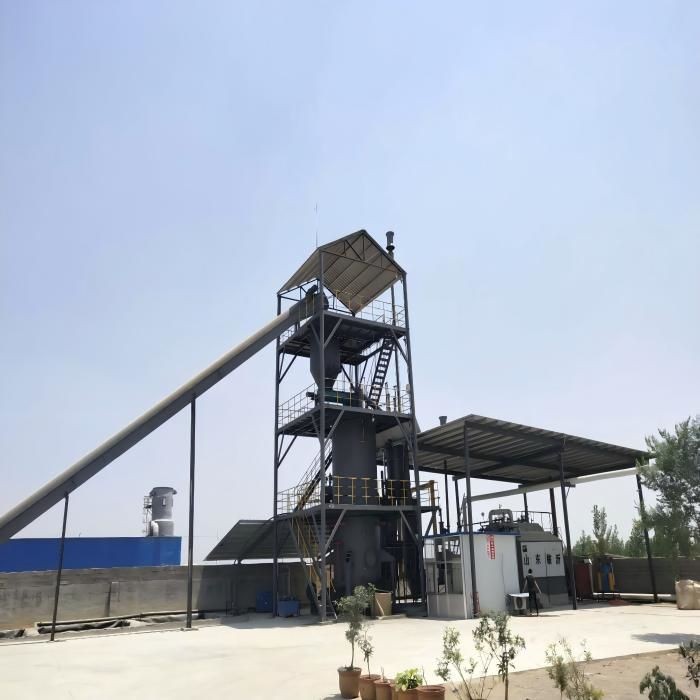
In addition, Ancillary Equipment for Biomass Gasification can also be integrated with mobile sewage treatment units. This ancillary equipment can enhance the overall treatment process by providing additional treatment steps or by utilizing the biomass generated during the treatment process. For example, biomass gasification can convert the organic matter in the sludge into useful energy, further reducing the environmental impact of the sewage treatment process.

Conclusion
In conclusion, mobile sewage treatment equipment offers a range of features that make it a versatile and effective solution for wastewater treatment. Its portability, compact design, modular construction, advanced treatment technologies, remote monitoring, energy efficiency, and cost - effectiveness make it suitable for a wide variety of applications, from temporary and emergency situations to long - term use in urban and industrial settings. The integration of biogas and ancillary equipment further enhances its performance and environmental sustainability.
If you are in need of sewage treatment solutions, I encourage you to consider mobile sewage treatment equipment. Our company, as a leading supplier of sewage treatment equipment, is committed to providing high - quality, customized solutions to meet your specific needs. Whether you are dealing with industrial wastewater, municipal sewage, or wastewater from special events, our mobile equipment can offer an efficient and cost - effective treatment option. Please feel free to contact us to discuss your requirements and explore the possibilities of our mobile sewage treatment equipment.
References
- Metcalf & Eddy. (2014). Wastewater Engineering: Treatment and Resource Recovery. McGraw - Hill Education.
- Tchobanoglous, G., Burton, F. L., & Stensel, H. D. (2003). Wastewater Engineering: Treatment, Disposal, and Reuse. Pearson Education.
- WEF (Water Environment Federation). (2019). Manual of Practice No. 8: Design of Municipal Wastewater Treatment Plants. Water Environment Federation.


