Fatih Birol, the Executive Director of the International Energy Agency (IEA), stated at the launch of the IEA's annual renewable energy report that the world will add 750 gigawatts of new renewable energy capacity this year, but 1,700 gigawatts remain "in queue awaiting grid connection." This is one of the biggest obstacles to achieving the goal set at the Dubai COP28 conference of tripling global renewable power generation by 2030.
The report found that under current conditions, renewable energy will increase by 2.6 times by 2030 compared to 2022, falling short of the threefold target.
However, Biro stated that eliminating a few bottlenecks could make this goal achievable, with the largest bottleneck being grid integration.
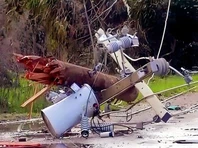
Fatih Birol stated that the instability of renewable energy grids is an "economic crime," and electrification will lead to system collapses due to a lack of flexibility.
He said, "Power rationing is increasing," and emphasized that there remains a significant and unacceptable gap between investments in power plants and power grids: the International Energy Agency estimates that for every dollar spent on electricity, half is spent on power grids.
The International Energy Agency's report found that "the rapid growth of volatile renewable energy sources is placing increasing pressure on power systems. Power cuts and negative electricity price events have emerged in more markets, indicating an urgent need for investment in grids, energy storage, and flexible generation." While acknowledging that some countries are addressing the issue through new capacity and storage auctions, it adds that "more work is needed to ensure the integration of variable renewable energy in an economically efficient and secure manner.".
The International Energy Agency stated that while some power curtailment is "expected and inevitable," persistent or large-scale curtailment often highlights gaps in planning, flexibility, or infrastructure. Therefore, reducing curtailment requires an integrated strategy covering transmission, flexibility, and coordinated system planning. The report emphasized that integrating intermittent renewable energy heavily depends on each country's unique circumstances, including its grid infrastructure and energy policies.
The report states: "Successful integration depends on adapting strategies according to local conditions to overcome challenges and optimize the use of renewable energy." It also notes that increasingly severe grid integration challenges have reignited interest in pumped-storage hydropower: the International Energy Agency predicts that the growth rate in this field will be nearly 80% faster over the next five years than in the previous five years.
Biro explained that the data from the International Energy Agency concluded that global renewable energy generation capacity would increase by 4,600 gigawatts by 2030, roughly equivalent to the combined total generation capacity of China, the European Union, and Japan.