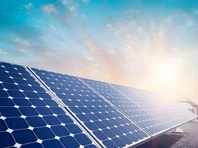
In recent years, the United States has seen record solar power generation, supported by the Biden administration's Inflation Reduction Act (IRA) and more green financing channels. As more solar projects join the grid across the country, the Solar Energy Industries Association (SEIA) recorded a record increase in solar power generation last year.
In the second quarter of 2024, the U.S. solar market added 9.4GW of new capacity, up 29% from the same period in 2023. In the third quarter, 8.6GW of new capacity was installed, up 21% from 2023. During this period, solar accounted for 64% of the new power generation capacity added to the U.S. grid. Solar projects currently generate enough electricity to power 37 million homes.
The states with the highest solar power generation are Texas and Florida, with 7.9GW and 3.1GW respectively. Although commercial solar power generation increased significantly in 2024, the Solar Energy Association SEIA expects residential solar power generation to shrink by 26% by the end of this year.
The United States is also investing in strengthening its domestic solar module manufacturing industry, which has been funded by the IRA and the bipartisan infrastructure bill (BIL). Domestic module manufacturing capacity increased by more than 10 GW to 31.3 GW in the second quarter, and another 9 GW was added in the third quarter to nearly 40 GW. This marks a significant increase from mid-2022, when domestic manufacturing capacity was just 7 GW. The first U.S. cell manufacturing plant also opened in the third quarter of this year. The sharp increase in capacity shows the impact of IRA and BIL on the industry, which provide more funding for green energy projects and provide tax breaks and other financial incentives.
The United States is subsidizing domestic manufacturing to support the localization of solar energy companies. According to the US Solar Market Insights Q4 2024 report from SEIA and WoodMackenzie, five new or expanded manufacturing plants were built in Alabama, Florida, Ohio and Texas. The report also noted that at full capacity, the United States can now produce enough solar panels to meet almost all domestic demand.
Although the future policy outlook of President-elect Donald Trump remains unclear, there is a strong pipeline of solar projects across the United States. SEIA currently expects the U.S. solar industry to install 40.5GW in 2024 and average at least 43GW per year between 2025 and 2029. Some of the key industry constraints SEIA highlights include an aging transmission infrastructure that is not ready for the influx of new solar, a lack of skilled labor, and delays in project connection.
The American Council on Clean Power (ACP) expects U.S. utility-scale solar installations to hit a new high of more than 32GW by the end of this year. "The U.S. solar market is expected to grow at a compound annual growth rate of 6.6% between 2025 and 2030, reaching 37GW of annual new installations in the last year of the century," ACP said. The group cited falling polysilicon prices as a driver of the positive short-term outlook, but warned that tariffs could increase costs.
This year, U.S. trade officials also set preliminary tariffs on solar cells from four major Southeast Asian exporters after U.S. manufacturers complained that the market was being flooded with unfairly cheap products. The U.S. Department of Commerce has set preliminary anti-dumping duty rates of 53.3% to 271.28% on solar cell imports from Vietnam, 125.37% on Cambodia, 77.85% to 154.68% on Thailand, and 21.31% to 81.24% on Malaysia. China currently dominates global solar supply and has large-scale operations in all four countries. A final decision on the anti-dumping duties is expected in April 2025.
Despite the expected tariffs on solar cells and the potential for a reduction in green funding under the Trump presidency, the solar project pipeline remains strong. This year, commercial solar power generation hit a record high. However, to encourage utility-scale additions in the coming years, greater investments must be made to improve the U.S. electric grid to prepare for the influx of solar power generation.