

Hey there! I'm working for a Biogas Sewage Treatment supplier, and today I wanna chat about the effects of agitation on biogas sewage treatment. It's a topic that's super important in our field, so let's dive right in.
First off, let's understand what biogas sewage treatment is. It's a process where we use microorganisms to break down organic matter in sewage and produce biogas as a by - product. This biogas can be used as a renewable energy source, which is pretty cool. You can learn more about it on this page: Biogas Sewage Treatment.
Now, agitation plays a crucial role in this whole process. One of the main effects of agitation is improving mass transfer. In a biogas digester, the microorganisms need to come into contact with the organic matter in the sewage to break it down. Without proper agitation, the organic matter might settle at the bottom, and the microorganisms might not be able to reach it efficiently. Agitation helps to keep the sewage and the microorganisms well - mixed. This means that the microorganisms can access the organic matter more easily, and the decomposition process can happen at a faster rate.
For example, think of a big pot of soup. If you don't stir it, the ingredients at the bottom might burn while the ones at the top are undercooked. But when you stir it, the heat and the flavors are evenly distributed. Similarly, in a biogas digester, agitation distributes the heat, the nutrients, and the microorganisms evenly throughout the sewage. This leads to a more efficient and consistent biogas production.
Another important effect of agitation is preventing the formation of a scum layer. In a biogas digester, over time, a layer of floating scum can form on the surface. This scum layer is made up of fats, oils, and other floating materials. If left unchecked, it can act as a barrier, preventing the exchange of gases between the liquid phase and the gas phase in the digester. Agitation helps to break up this scum layer, allowing the biogas to escape more easily.
Moreover, agitation can enhance the activity of the microorganisms. The microorganisms in a biogas digester are living things, and they need a suitable environment to thrive. Agitation helps to maintain a uniform temperature and pH level throughout the digester. It also ensures that there is enough dissolved oxygen in the sewage (although biogas production is an anaerobic process, a small amount of oxygen is still important for the initial stages of some microbial activities). When the microorganisms are in a more favorable environment, they are more active, and they can break down the organic matter more effectively.
However, it's not all roses. There are also some potential negative effects of agitation. For instance, if the agitation is too intense, it can damage the microbial communities. The microorganisms are delicate, and excessive agitation can shear them apart or disrupt their natural habitats. This can lead to a decrease in the biogas production rate. So, finding the right balance is crucial.
Another thing to consider is the energy consumption of the agitation system. Agitation usually requires energy, whether it's from an electric motor or some other power source. If the energy consumption is too high, it can offset the benefits of the increased biogas production. That's why we need to design and operate the agitation system in an energy - efficient way.
Now, let's talk about the types of agitation systems that are commonly used in biogas sewage treatment. There are mechanical agitators, which use blades or paddles to stir the sewage. These are very effective in mixing the contents of the digester, but they can be a bit expensive to install and maintain. There are also gas - based agitation systems, which use the biogas produced in the digester to create bubbles and stir the sewage. These systems are more energy - efficient, but they might not be as effective in some cases.
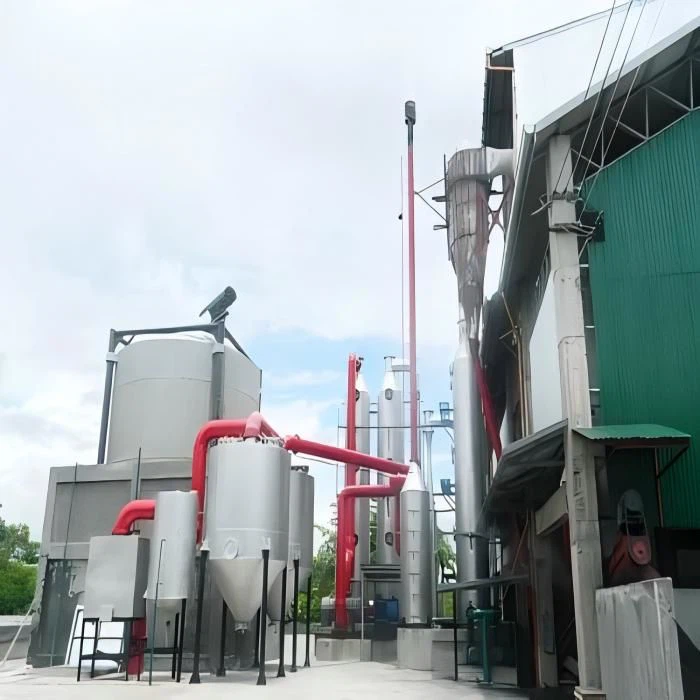

In addition to the main biogas sewage treatment process, we also offer Ancillary Equipment for Biomass Gasification. This equipment can help to further optimize the biogas production process and make the whole system more efficient.
So, as you can see, agitation has both positive and negative effects on biogas sewage treatment. But when managed properly, the benefits far outweigh the drawbacks. It can significantly improve the efficiency of biogas production, reduce the formation of scum, and enhance the activity of the microorganisms.
If you're in the market for biogas sewage treatment solutions, whether it's the main treatment equipment or the ancillary equipment, we're here to help. We've got a team of experts who can provide you with the best advice and the most suitable products for your needs. Don't hesitate to reach out and start a conversation about your biogas sewage treatment requirements. We're looking forward to working with you to achieve a more sustainable and efficient sewage treatment process.
References
- Smith, J. (2018). "Advances in Biogas Sewage Treatment Technology". Journal of Environmental Science.
- Brown, A. (2019). "The Role of Agitation in Anaerobic Digestion". Biogas Research Magazine.


